If you’ve been searching for a lawyer, you’ve probably seen it everywhere—badges, seals, and logos claiming “Top Attorney,” “Elite Lawyer,” or “Best in America.”
At first glance, it’s reassuring. Awards suggest credibility. They imply trust. They make it seem like your choice just got easier.
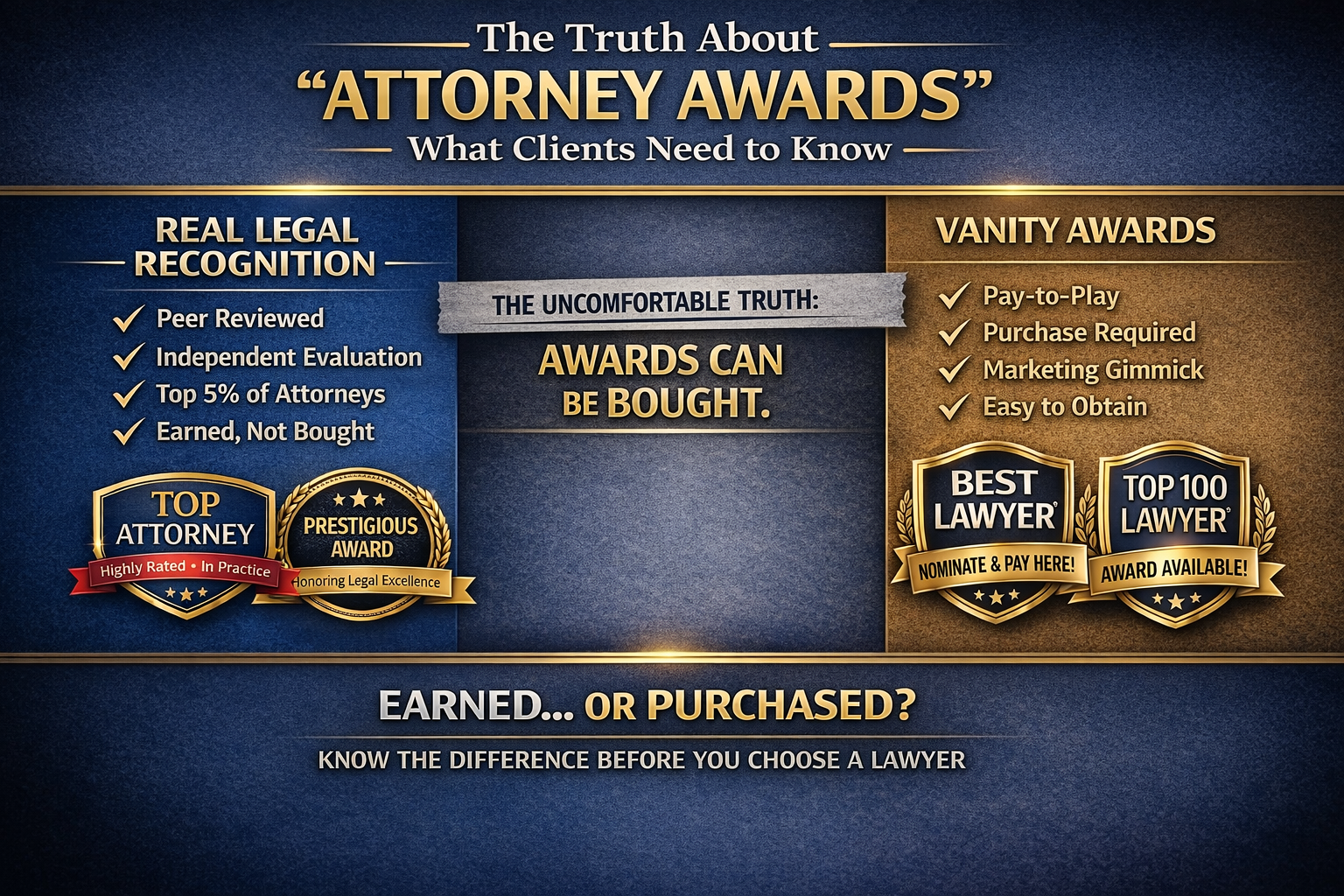
But here’s the uncomfortable truth:
Not all attorney awards are created equal—and many are little more than marketing tools.
The Rise of “Pay-to-Play” Legal Awards
Over the past decade, a new wave of legal “awards” has flooded the market. These programs often present themselves as prestigious honors, but behind the scenes, the model can look very different.
Many operate as directories or marketing platforms rather than true merit-based recognitions. While they may describe a selection process involving nominations and reviews, they also often offer paid features—like plaques, promotional materials, or enhanced listings.
In fact, legal industry commentary has a name for this phenomenon:
“Vanity awards” or “pay-to-play awards.”
These are recognitions where payment—not performance—is often the key factor separating those who are “awarded” from those who are not.
That doesn’t necessarily mean every attorney listed is unqualified. It means the award itself may not be a reliable measure of excellence.
Why These Awards Exist
The reality is simple: awards sell.
Legal marketing experts acknowledge that awards can strongly influence client decisions. They build trust quickly, especially for people facing stressful situations like personal injury, criminal charges, or family disputes.
For lawyers, participating in these programs can provide:
* Increased online visibility
* SEO benefits and backlinks
* Branded materials for advertising
* Perceived credibility at a glance
From a business standpoint, it works.
But from a client standpoint, it can be misleading.
What Real Legal Recognition Looks Like
There are legitimate, highly respected awards in the legal industry.
The difference?
They cannot be bought.
For example, truly credible recognitions:
* Are based on extensive peer review
* Involve thousands of independent evaluations
* Recognize only a small percentage of attorneys (often 5% or less)
* Do not require payment to receive the honor
These awards are rare—and they’re earned through years of proven results, not marketing packages.
The Problem for Clients
Here’s where it matters most: you.
When every lawyer has multiple badges on their website, awards stop being meaningful. They become noise.
And worse, they can create a false sense of security.
A polished badge does not tell you:
* How many cases the attorney has actually won
* How they treat their clients
* Whether they fight aggressively or settle quickly
* What results they’ve achieved in situations like yours
Why Luhrsen Goldberg Is Different
At Luhrsen Goldberg, we don’t rely on flashy badges to define who we are. Any awards we do have or share are based on peer and client reviews only—such as our recognition from Martindale‑Hubbell and AVVO.
We focus on:
* Real case results
* Personal attention to every client
* Aggressive advocacy when it matters most
* Building trust through action—not labels
Our work speaks for itself—through the lives we’ve helped rebuild and the outcomes we’ve delivered.
Because at the end of the day, you don’t hire a logo. You hire a lawyer.
The Bottom Line
Attorney awards can look impressive—but many are designed more for marketing than merit.
So before you choose a lawyer based on a badge, ask yourself:
Is this recognition earned… or purchased?
Your case—and your future—deserve more than a sticker.